

Case #032 -🚨 Error 8572: When a Valid GTIN Looks Invalid to Amazon
A seller’s GTIN came directly from GS1, yet Amazon still marked it as invalid and resolving it required two separate teams and two processes completed in the right order.

If you’re new here, welcome.
If you’ve been reading for a while, thank you for being here.
Each week, we break down one real Amazon case from the field. Not to share tactics, but to decode how Amazon’s system actually behaves and what to do when it breaks.
All past cases live in a single searchable archive, built to help you identify recurring patterns across time.
OSS LAB is powered by Online Seller Solutions, the Amazon operations team behind the cases we publish, working directly inside Seller Central to resolve complex operational issues. Contact Online Seller Solutions to learn more about our Amazon services and how we can help resolve the issues affecting your account.
Context
When Amazon restricted an ASIN over a valid GTIN
The seller was trying to create a listing for a dietary supplement under their registered brand, using the GTIN as the product ID, which had been purchased directly from GS1 and belonged to the seller’s company.
In most cases, having a valid barcode from the official issuing body is enough to create a product on Amazon and be compliant with the listing requirements related to Product IDs.
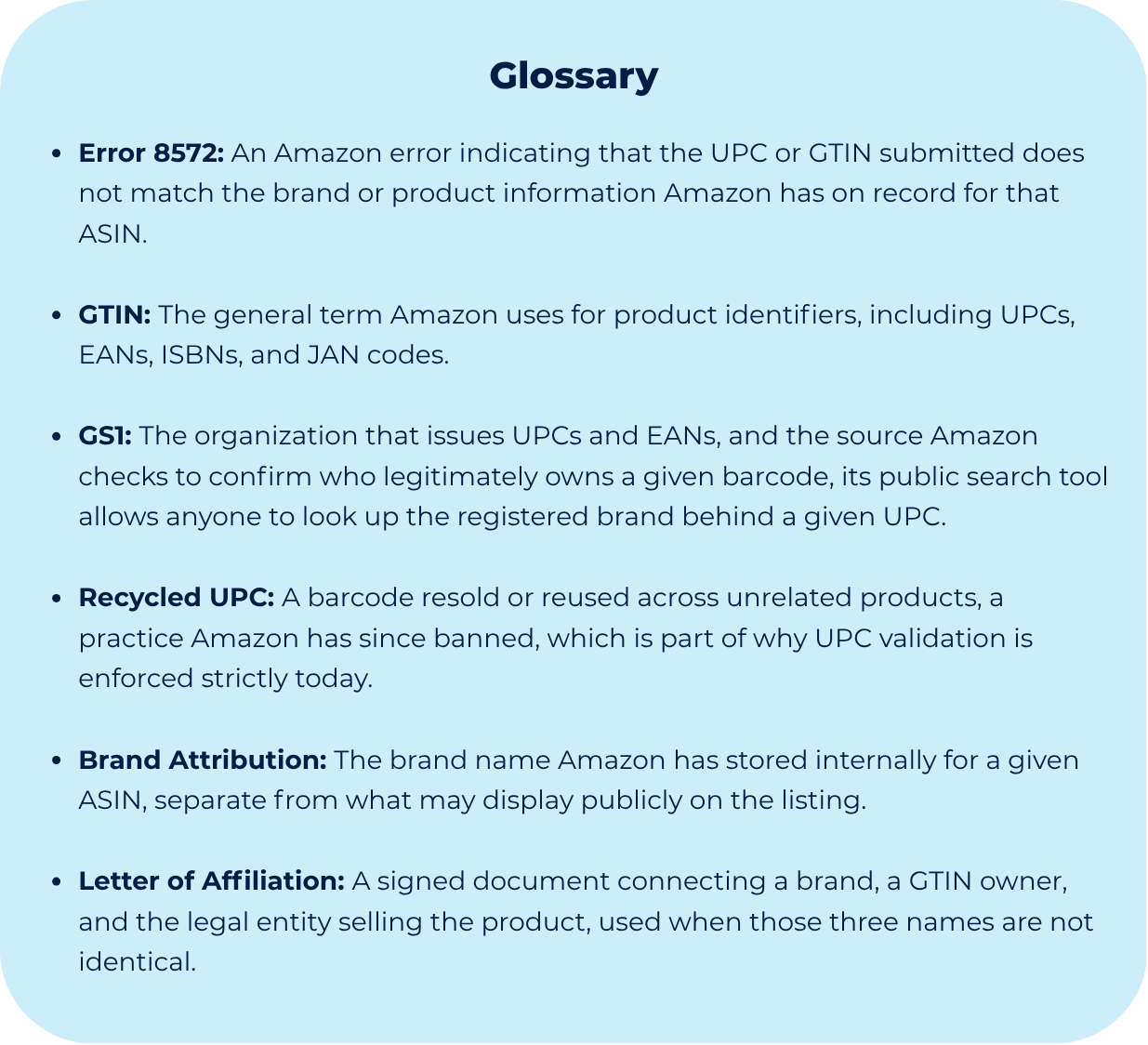
But even so, Amazon blocked the submission with Error 8572, stating that the product identifier did not match the brand.
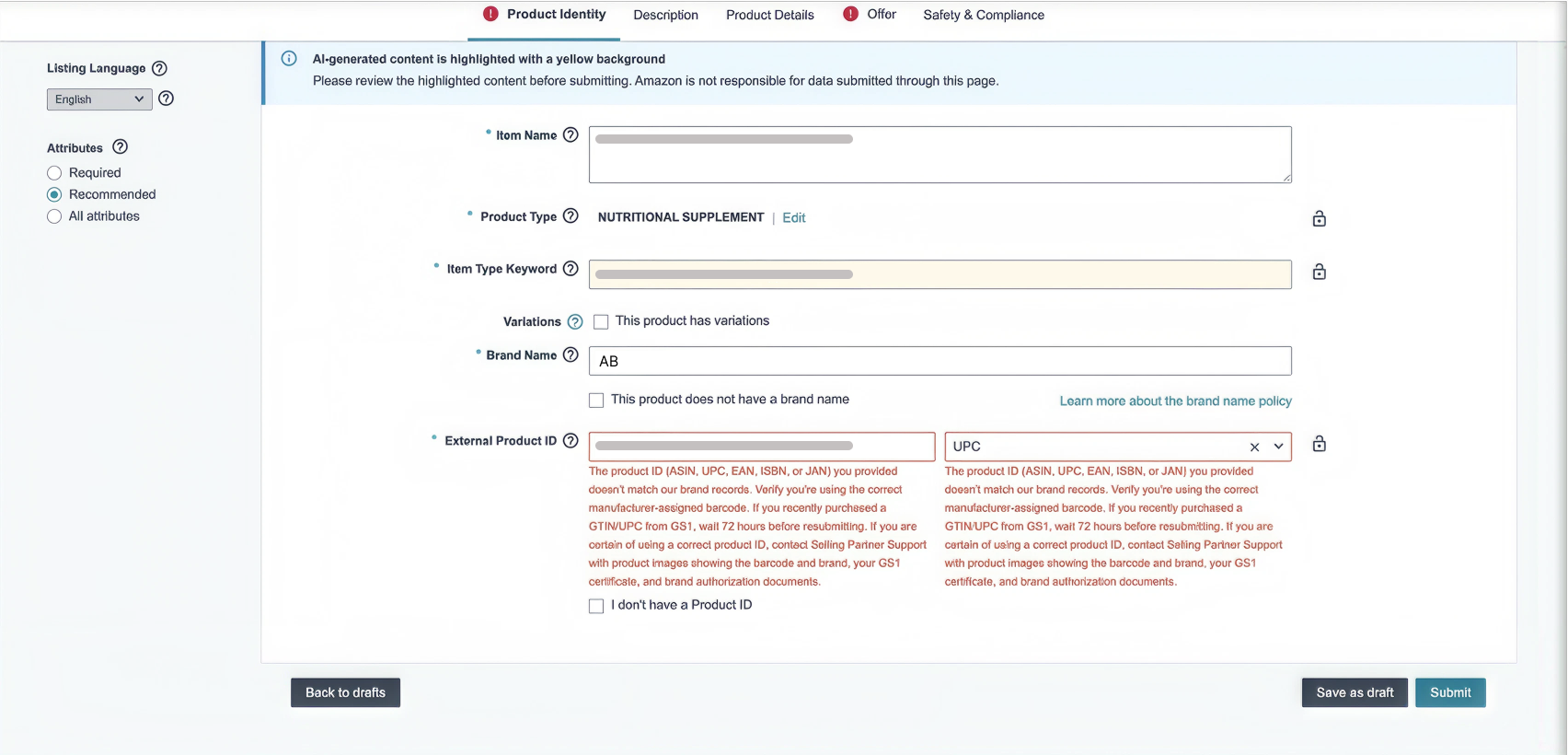
Because of that, the seller assumed the fix would be a documentation problem, which is valid to think, so they expected that by sending Amazon proof that the GTIN belongs to the brand, the flag would clear.
But since the GTIN used for the product in question was purchased properly, and they were the owners of the product, that meant it wasn’t just a problem with the documents, it must have been something more related to an issue with the data in that document.
Otherwise, how could Amazon have said that the product ID didn’t belong to that product if it was the first time it had been used?
That is what we kept in mind to find a way to solve this case.
Diagnostic
Why Amazon treated a legitimate GTIN as invalid
Error 8572 appears when Amazon cannot confirm that a GTIN belongs to the brand entered on the listing, since the message points directly at the GTIN , here is an example:
“You are using UPCs, EANs, ISBNs, ASINs, or JAN codes that do not match the products you are trying to list. Using incorrect codes is prohibited and it can result in your ASIN creation privileges being suspended or permanently removed. Ensure you are always using the appropriate code when listing a product.”
This message also confirmed to us that this case was a matching problem between three separate records that Amazon’s backend keeps apart:
The brand attribute on the ASIN
The ownership record at GS1
And the legal entity behind the seller account
Because for a GTIN to be valid on Amazon, the brand registered with GS1 has to match either the brand attribute on the ASIN or the name on the Seller Central account (one of the two, not necessarily both), and when neither matches, Amazon treats the GTIN as unverifiable and applies the invalid GTIN flag.
With that in mind, when we found that the ASIN’s page in Seller Central shows one brand name, but the backend authority that validates GTINs checks an additional set of fields entirely and flagged the listing, it meant that the brand name stored in Amazon was, in fact, the issue.
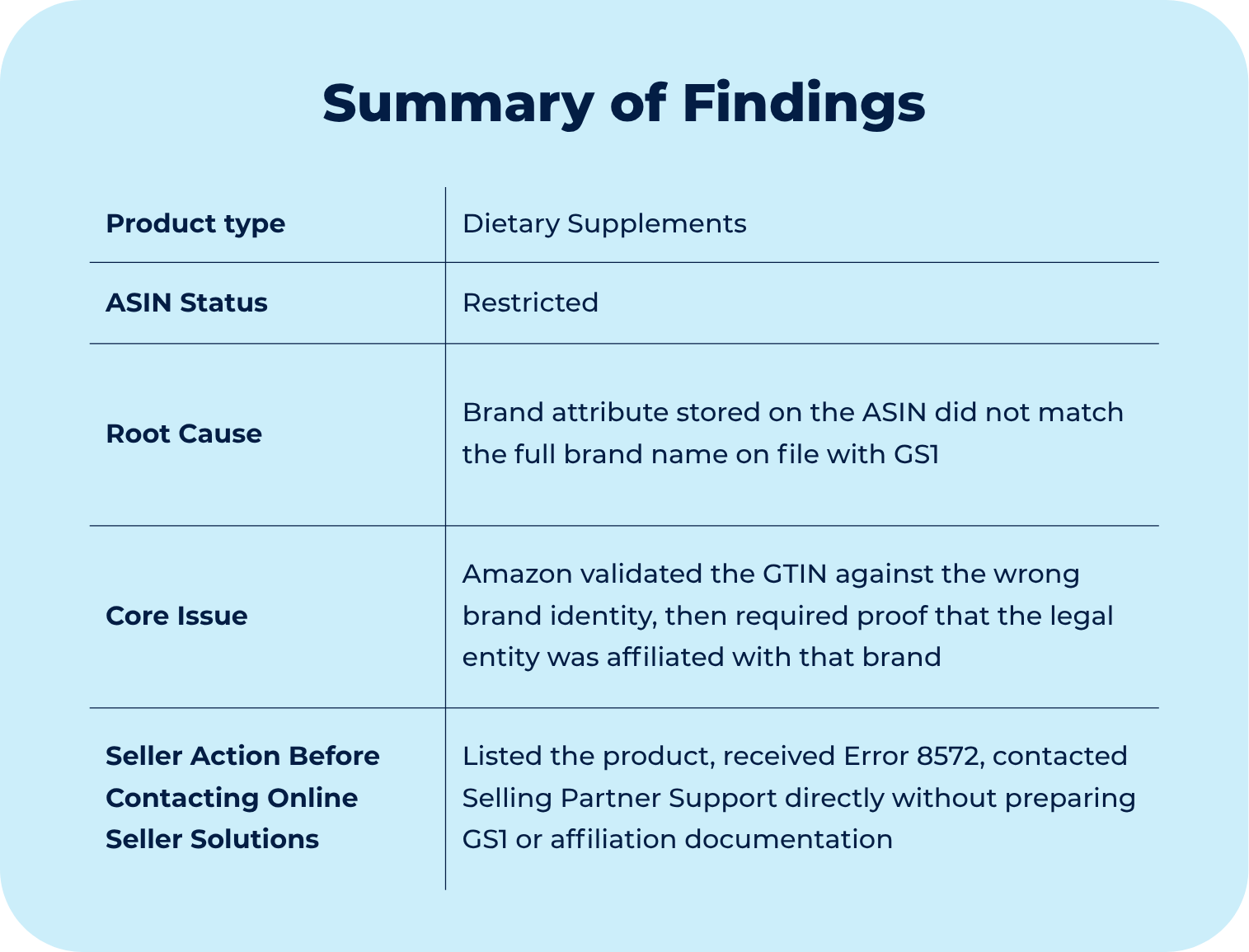
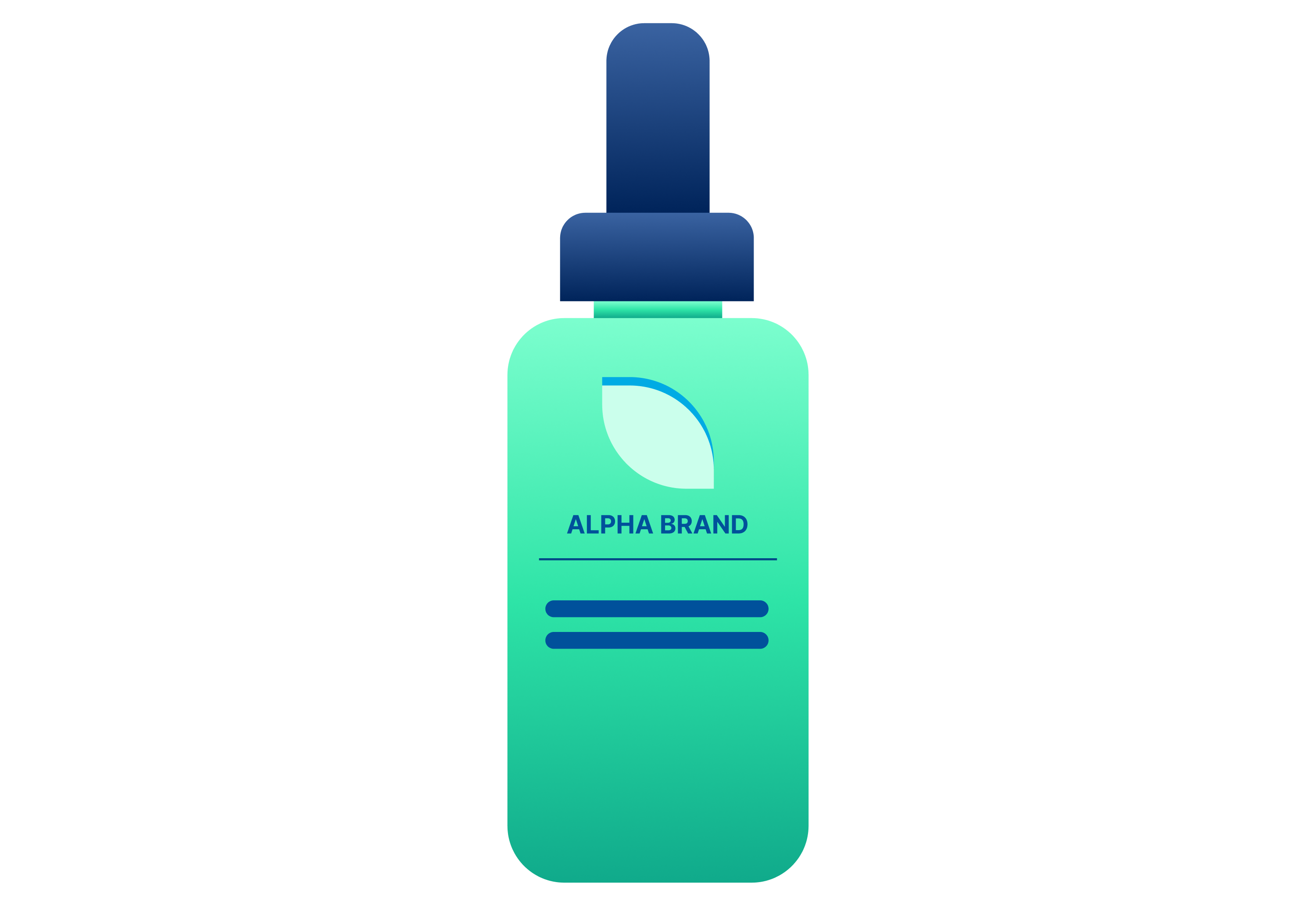
In this case, when the listing was first created, the seller entered an abbreviated brand name instead of the full name registered with GS1, for example, Amazon stored “AB,” while the GS1 record showed “Alpha Brand” The GTIN was connected to the complete brand name.
A person could understand that both names referred to the same brand, but Amazon treated them as two different brands.
But since those names did not match, Amazon concluded that the GTIN did not belong to the product and marked the GTIN as invalid.
This created two separate issues:
Amazon had the wrong brand name stored on the ASIN.
The GTIN had already been flagged as invalid because of that mismatch.
The seller could not solve the GTIN issue first as long as the incorrect brand remained in the catalog, because Amazon would continue comparing the GTIN against the wrong information, so the brand attribution had to be corrected first. Only after Amazon recognized the correct brand could the invalid GTIN flag be reviewed and removed.
If you are dealing with Error 8572, an invalid GTIN flag, or a UPC that Amazon says does not match your brand, contact Online Seller Solutions.
Our team can identify the source of the mismatch, correct the brand attribution, prepare the required evidence, and manage the GTIN appeal with Amazon.
Instead of opening the same case again and receiving the same response, send us the details and let us help you resolve it.
Though Process
Why one appeal round was not enough
The first instinct after getting Error 8572 is to send everything at once:
GS1 Certificate
The Trademark
The Letter of Affiliation
All in one shot, and that can work, but it is not the approach we took here because it can create more problems than solutions.
Instead, to make this the right way, we focused on understanding why this is happening in terms of how Amazon works, and why this kind of strict checking is fairly new, too.
In the past, a lot of sellers used what people called recycled UPCs, barcodes that got resold and reused on totally different products, with almost no one checking if that was allowed, after finding it out Amazon banned that and started checking much more closely, which is why even a UPC bought the right way, straight from GS1, can still get flagged if something else in the listing does not match up.
That history explains why the case could not be treated as one flat pile of documents.
Each piece of evidence exists to answer a specific question Amazon has about ownership, and sending a document before Amazon is asking that question does not speed anything up, it just sits in the case unread.
For example, the GS1 certificate and trademark answer “does this brand own this GTIN”, while the Letter of Affiliation answers a completely different question, “is this seller allowed to represent that brand.” Treating those as one bundle instead of two separate answers is what makes most appeals stall, since Amazon reviews them as separate checks even when a seller submits them together.
Understanding that distinction is what shaped how we prioritized the paperwork before ever opening a case, not the order Amazon happened to ask for things, but the order the underlying questions needed to be answered in.
Knowing which document proves which fact, and holding back the ones that wouldn’t mean anything yet, is what kept the case moving instead of stalling on unnecessary back-and-forth.
Want to see how the case was actually resolved?
Premium subscribers get access to the full breakdown, including:
The exact order for correcting the brand attribution before asking Amazon to review the GTIN again.
The evidence package Amazon expects for Error 8572, including GS1 documents, trademark records, product photos, and the Letter of Affiliation.
The support wording, escalation path, and checks needed to confirm that the invalid GTIN flag was actually removed.
The “What This Teaches You” section, where we extract the larger Amazon pattern behind the case.
The entire archive of every premium OSS Lab case study we’ve published, instantly unlocked.
Additional Amazon system behaviors, enforcement patterns, and operational intelligence we reserve exclusively for OSS Lab members.
