

Case #018 - 🔁 Launching a new ASIN does not close the loop on the old one.
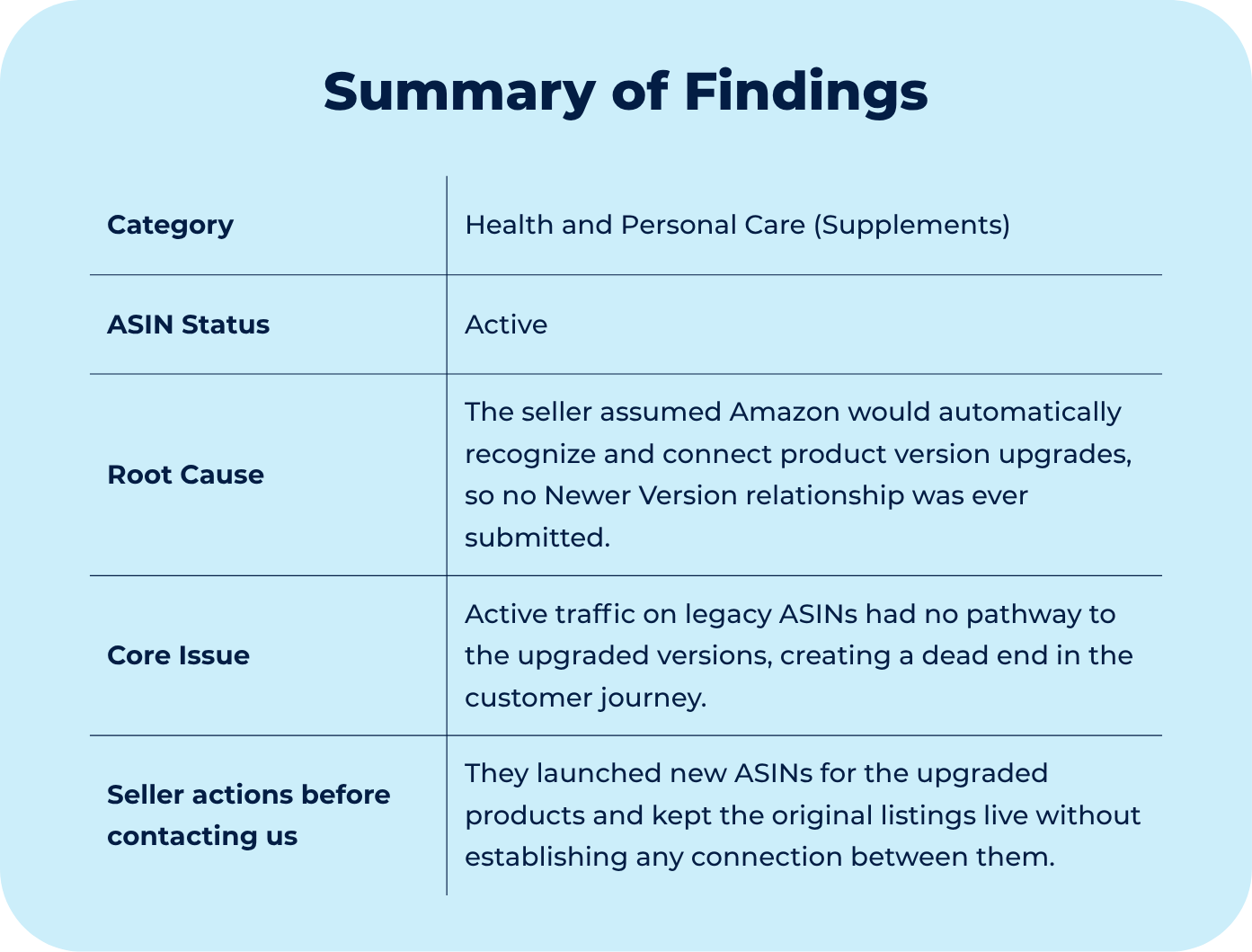
A seller launched 44 new ASINs as an upgrade of their existing product, but they wanted to keep the traffic from the old version because they spent a lot of time building the brand.

If you’re new here, welcome.
If you’ve been reading for a while, thank you for being here.
Each week, we break down one real Amazon case from the field. Not to share tactics, but to decode how Amazon’s system actually behaves and what to do when it breaks.
All past cases live in a single searchable archive, built to help you identify recurring patterns across time.
Context
The assumption that creates the gap
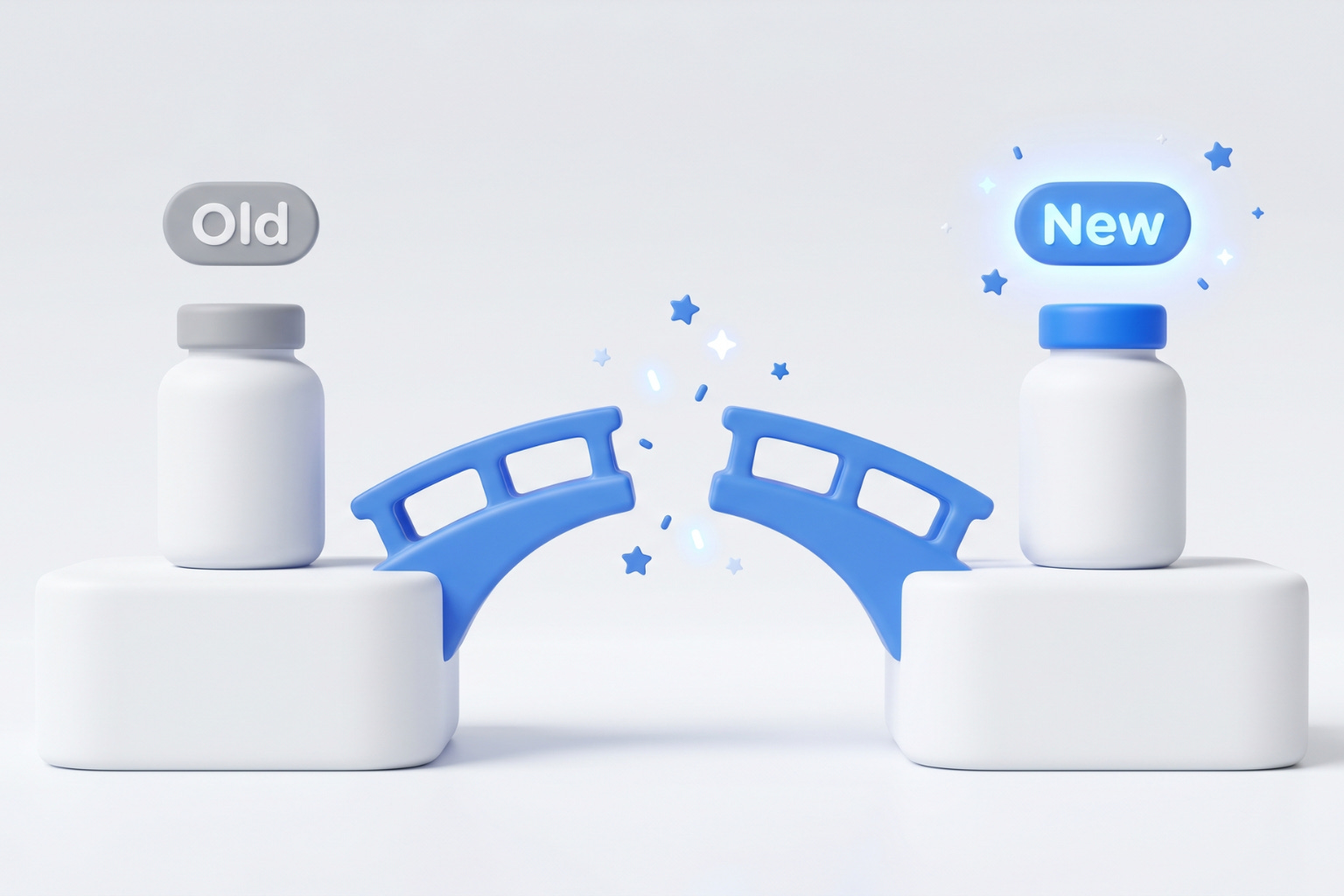
This brand had been operating on Amazon for several years, building a catalog of supplement products in liquid form, and when they decided to upgrade their line to capsules, offering the same formulations in a more convenient delivery method, they followed the standard launch process: new product, new ASIN, new listing.
The catalog looked clean from the inside, the new ASINs were live, the old ones were still generating organic traffic, and the brand was preparing to phase out the older format over time.
What they identified was not a problem in the traditional sense, since there were no errors to fix, no penalties to reverse, no performance issues to resolve.
What they recognized was a gap in the customer journey: across 44 products, each with an older and a newer version active in the catalog, a customer landing on any of those older listings had no visible path to the upgraded version of that same product.
The old detail pages offered no signal that a better version existed. The system was not going to create those connections on its own.
So the goal when they came to us was to complete a relationship that the catalog had not been asked to form yet.
Diagnostic
How the system handles version transitions
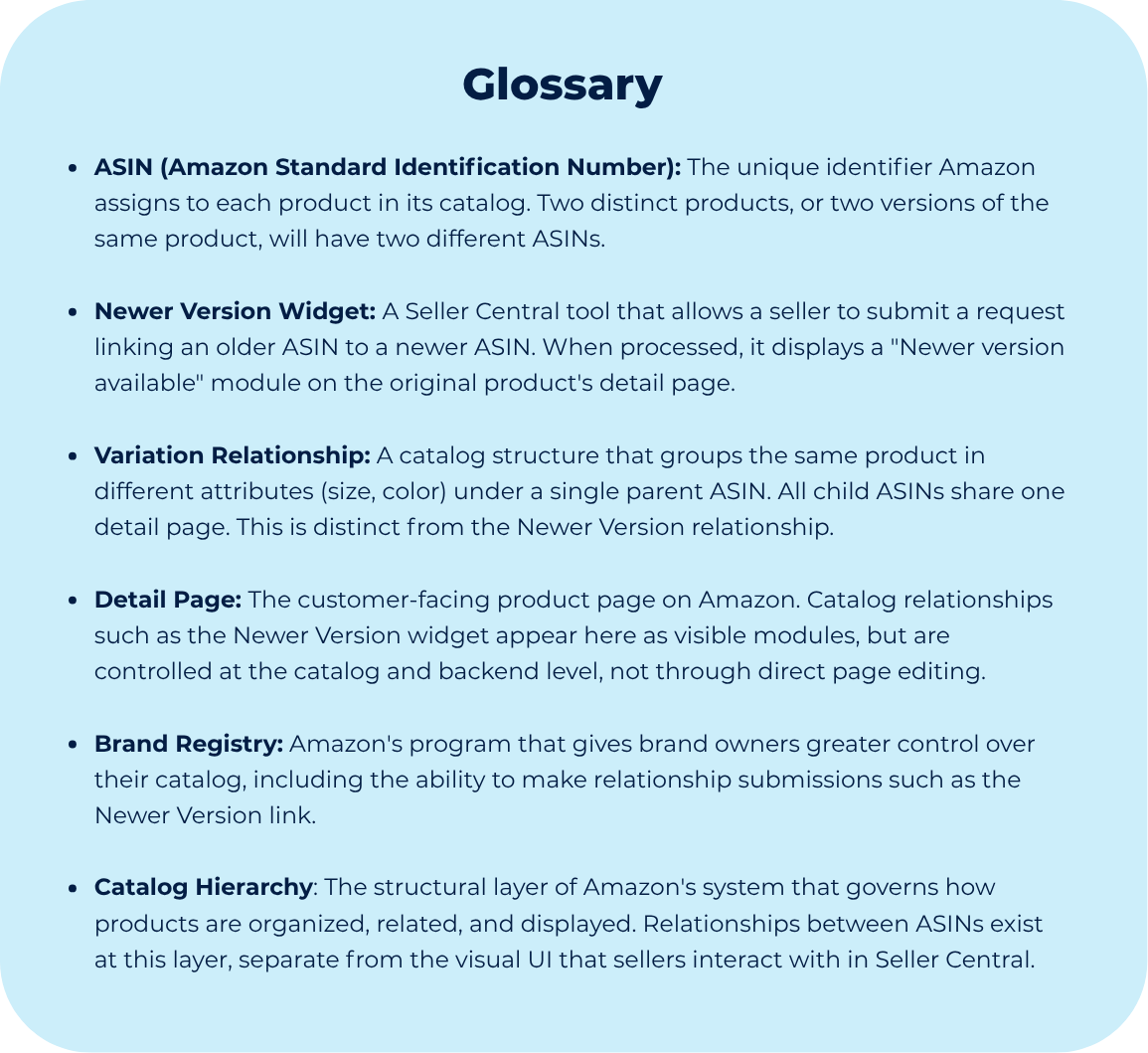
Amazon’s catalog supports different types of relationships between ASINs, and understanding which one applies to a given situation changes the outcome significantly.
The most common relationship type sellers encounter is family variations. Variations group the same product when it comes in different sizes or colors. All of those options live on a single detail page, and the customer can switch between them without leaving the detail page. This structure works because the products are essentially identical except for their variant theme.
There is another type of relationship on Amazon called “Newer Version” relationship, which works differently, and the distinction matters. It is not for products that differ by size or color. It is for products where one is a genuine upgrade of the other: same core product, same function, same intent, but improved.
The two ASINs in this case remain as separate listings. Nothing gets merged. What the system adds is a visible module on the old detail page that tells the customer a newer version exists and points them directly to it.
The submission process reflects this separation. Inside Seller Central, there is no standard menu item for creating this type of link. Two paths exist for submitting the request:
A dedicated widget at a specific Seller Central URL, which is the path used in this case.
The second is through the Seller Assistant chat tool, also accessible within Seller Central, where the request can be submitted conversationally by providing both ASINs.
Both paths generate a Seller Support case behind the scenes, which Amazon’s team handles and closes within the expected window.
The qualification criteria require that both ASINs share the same function, quantity, type, and style. In this case, the format changed from liquid drops to capsules, and the system accepted the pairing without requiring additional justification, because the product continuity was clear from the catalog data.
If you have products in your catalog that went through a version update and the relationship was never submitted, this is the case to act on.
Submit your ASIN pairs here and we will handle the submissions for you
Though Process
How the decision was made
When both an older and a newer version of the same product exist in the catalog, the key decision is selecting the correct relationship type to represent that connection.
The core logic here was straightforward. The new capsule format was a genuine upgrade of the existing drop format: same formulation, same dosage, same intended customer, delivered in a more convenient way.
So a customer who had purchased the drops before, or who was browsing the older listing, was exactly the right audience for the new version. Creating a visible path from the old listing to the new one meant that existing traffic on the older ASIN could be directed toward the current offer, supporting sales of the newer product while naturally reducing reliance on the older format as inventory wound down.
The first question was whether a variation relationship could serve this purpose, and it could not.
Variations are designed for products that are identical except for a single attribute such as size or color. The drops and the capsules are not the same product in a different size. They are the same formulation in a different delivery format, which places them in a different relationship category. Treating them as variations would misrepresent the catalog structure and carry the risk of a policy violation.
The second consideration was whether submitting 44 ASINs simultaneously through a tool that generates Seller Support cases would create delays or trigger a review due to the high amount of ASINs in the request. Based on the outcome, it did not.
All 44 relationships were processed and live within 24 hours, with no rejections.
